



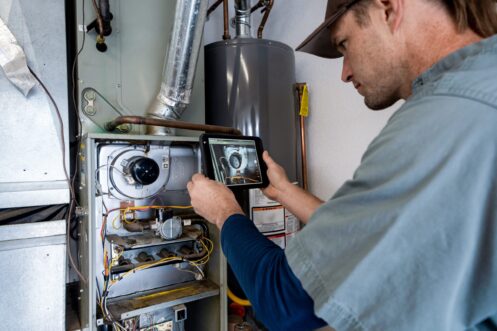
Replacing a furnace is a significant investment, and it’s one that impacts your home’s comfort and efficiency for over a decade. If you’re planning to upgrade, timing is everything. Knowing when to act can help you make the most of your investment and avoid unnecessary stress. Here’s what to consider.
The Best Time of the Year to Replace Your Furnace
You should replace your furnace before it becomes inconvenient for you. Sure, you can do this any time of the year, but there are a few practical moments that may help you save money and spare you discomfort. They include fall and spring, also known as shoulder seasons.
During these periods, HVAC demand is lower, which means you can go without heating for a day or two. HVAC companies also tend to be less busy compared to peak seasons; therefore, you’ll benefit from easier scheduling, quicker installation times, and perhaps better deals.
Moreover, a fall installation ensures your new furnace is ready to perform before winter hits. On the other hand, a spring upgrade lets you squeeze out the last bit of efficiency from your current unit before retiring it.
Signs You Should Upgrade
Some indicators signal that it’s time to consider getting a new furnace. They include:
1. Insufficient Heating
A furnace is a heating system, meaning its primary purpose is to heat air to your desired temperatures. If it can’t do that, it’s no longer fulfilling its core function, and you should replace it.
Insufficient heating doesn’t just occur overnight. It often begins subtly. You’ll notice the furthest rooms or sections of your house struggling to stay warm. Then, your unit will cycle longer to maintain the same level of comfort. This decline can stem from several underlying issues.
The common culprit is the wear and tear of components. For instance, the repeated expansion and contraction of the heat exchanger’s metal can cause stress and sometimes even cracks that diminish efficiency and effectiveness. The blower motor can also lose power or precision over time, reducing airflow and making it harder to distribute heat evenly throughout the home.
2. Your Energy Bills Are Unusually High
As the weather gets cooler, your furnace’s energy consumption will slightly rise to maintain a comfortable indoor environment. However, this increase should be proportional to the drop in outdoor temperatures. If your energy bills spike dramatically without a corresponding change in usage habits, your system could be struggling. Factors such as aging components, poor combustion, or reduced airflow will force it to work harder and consume more energy than it should.
A rise in energy bills is not always readily apparent. Always compare your previous year’s usage for the same month while considering weather conditions and any changes in occupancy or thermostat settings.
Consider calling a licensed HVAC technician for a comprehensive inspection. Sometimes, other issues such as poor insulation, air leaks and drafts, old windows and doors, and aging appliances may be at fault.
3. Your Furnace Breaks Down Frequently
If you routinely service your furnace, you should rarely experience breakdowns. A repair or two throughout the heating season is normal, especially for older units, but frequent issues are a red flag. Your home’s heating load may be straining your system.
Many homeowners use two principles to determine whether replacement is the smarter choice: the 50% rule and the $5,000 limit directive. The 50% rule states that if the cost of furnace repairs throughout winter exceeds 50% of the value of a new unit, an upgrade is usually more economical.
The $5,000 rule involves multiplying the estimated repair cost by the age of your system. If the result is more than $5,000, it’s time to consider a replacement. For example, if your heat exchanger fails and the repair costs $1,000, and your furnace is 9 years old, the total, $9,000 suggests it’s time to upgrade to a newer, more efficient unit.
4. Old Age
The average lifespan of a residential furnace is 15 to 20 years, with proper care and routine maintenance. Note that proper care also includes ensuring that your home is well insulated, airflow is balanced, and the windows and doors are energy-efficient.
Typically, after 10 to 12 years, most systems begin to show signs of wear. This is the ideal time to consider a replacement. A new furnace, when properly sized and installed, can significantly improve comfort, indoor air quality, energy efficiency, and long-term reliability.
Contact Dog House for Professional Furnace Replacement
Installation plays a critical role in the furnace’s performance and efficiency. If done right, your system will deliver optimal performance for the longest time possible. If poorly done, besides reduced comfort, frequent breakdowns, and excessive energy consumption, your unit will prematurely fail.
That’s why it’s important to work with heating services experts like Dog House. We have over 15 years of hands-on experience, use only the highest quality, Energy Star-certified products, and prioritize the complete satisfaction of our customers.
Call Dog House today for professional furnace installation in Brunswick.
End Of Article